New HMI for Powerful Air Compressors New HMI / KAISHAN USA
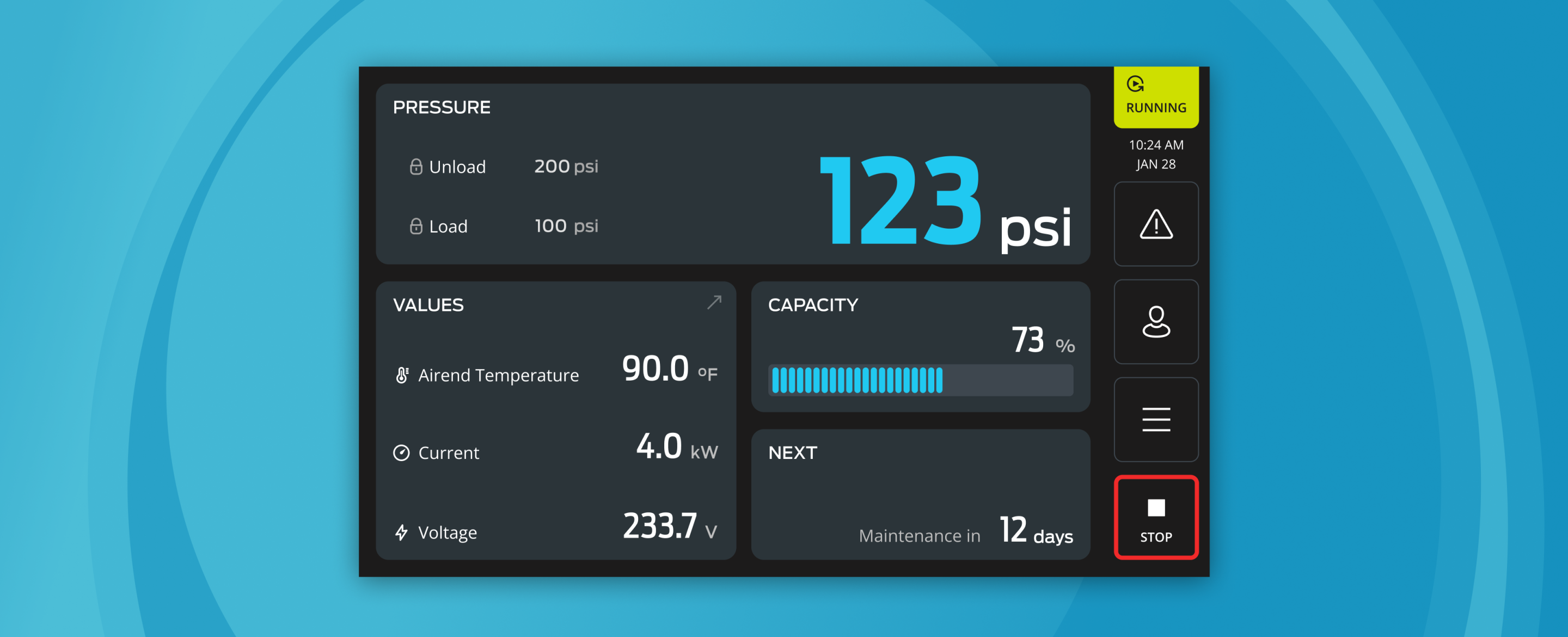
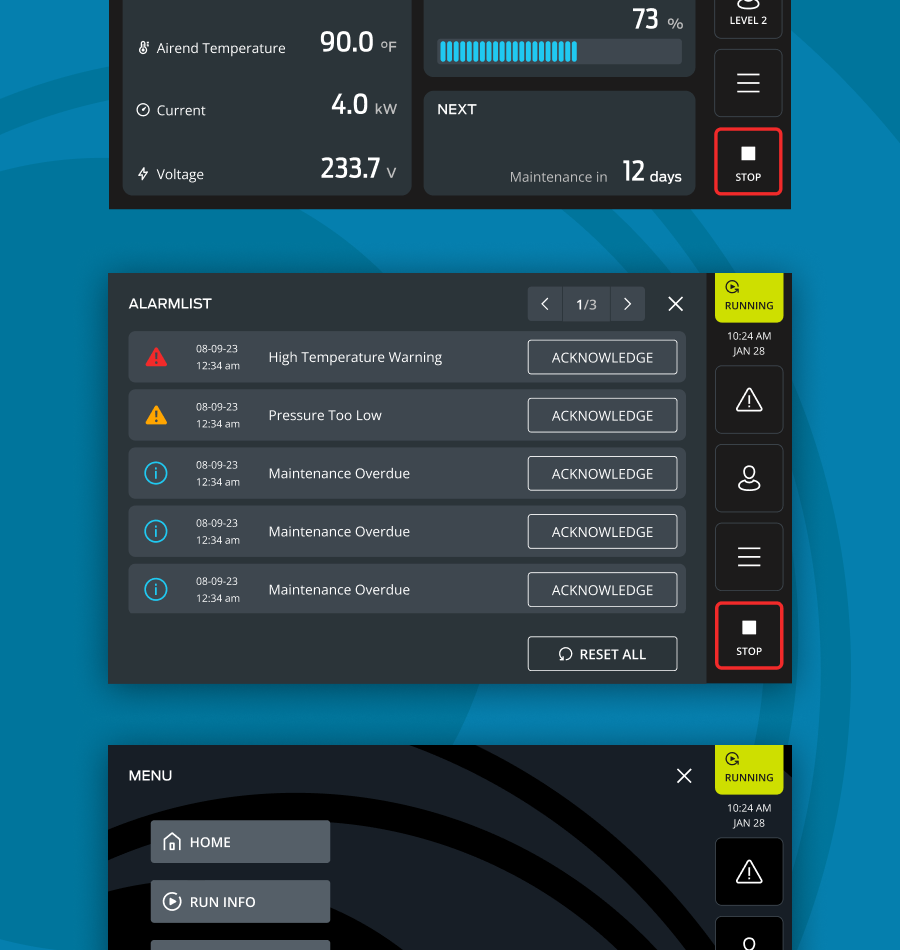
The new HMI for Kaishan USA is an interface solution for industrial compressed air systems. The aim was to simplify the operation of compressor systems and improve user-friendliness. Existing operating concepts were revised and combined in a clearly structured, intuitive user interface. The user interface offers clear visualizations, process-oriented navigation, and unambiguous warning communications—for reliable and safe use in industrial environments.
Challenge and Use
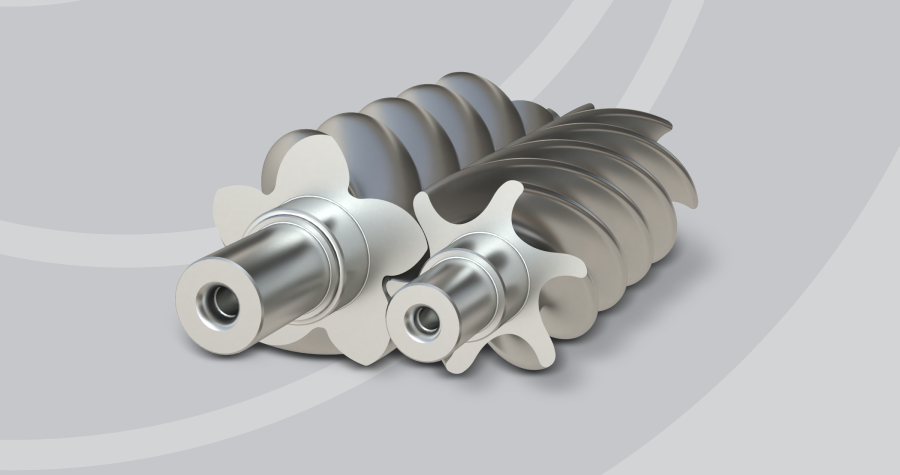
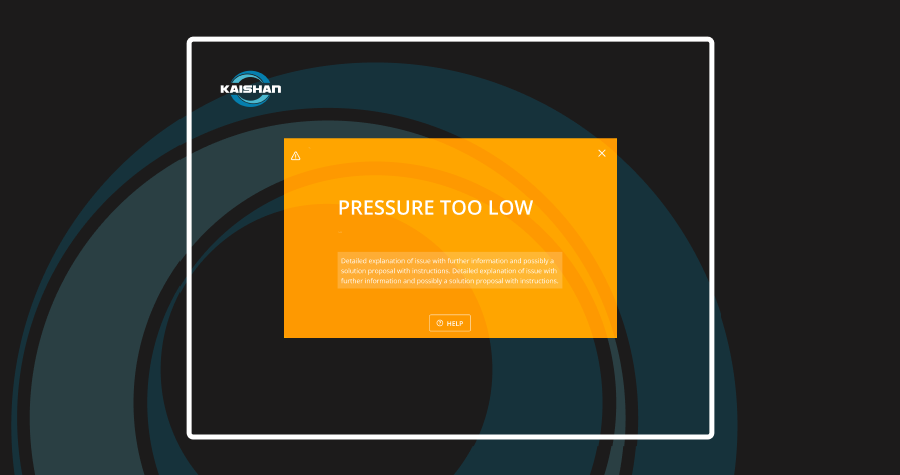
Kaishan has been a leader in air compression technology for over 60 years and has extensive experience in developing robust and efficient compressed air systems. With this expertise behind it, the task was to develop an HMI system specifically tailored to the requirements of industrial applications. The focus was on the challenge of displaying complex system states clearly and unambiguously, especially when critical warnings occur. The interface must be understandable at a glance and communicate reliably, even without regular interaction, whether the system is running properly or whether action is required.

Brand Design
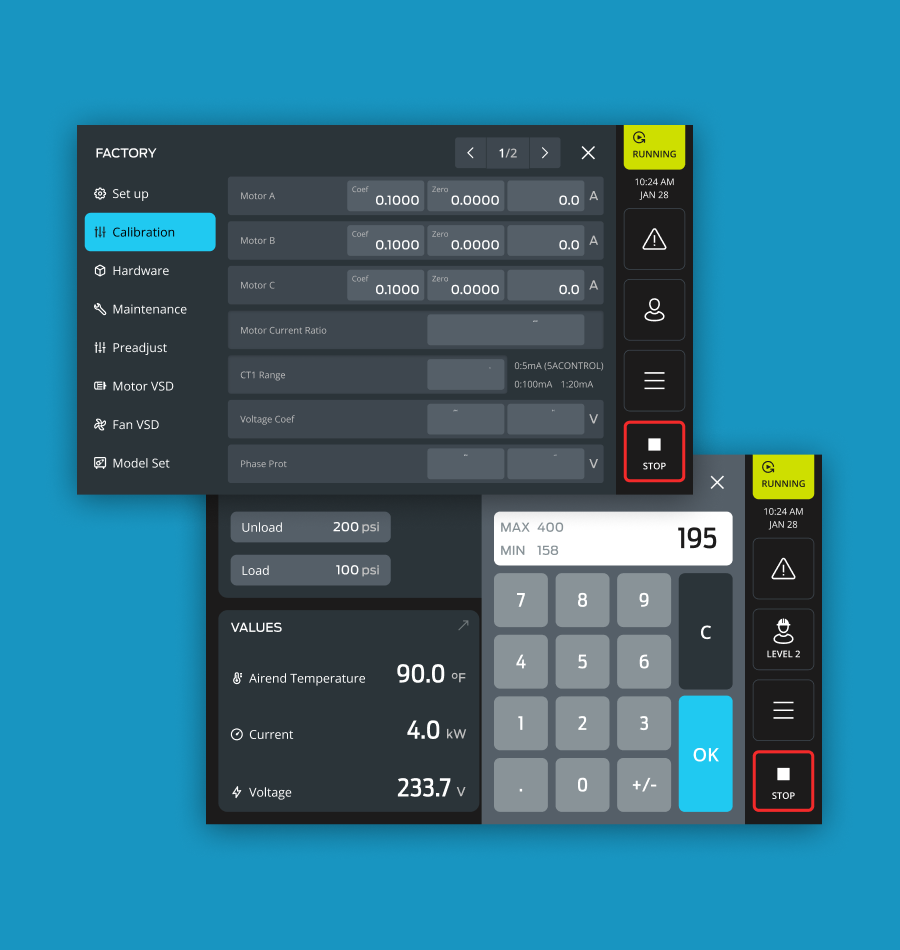
The user interface takes central elements of Kaishan's corporate design and translates them into a clear, functional interface design. Existing design elements such as typography, color scheme, and geometric shapes have been retained and adapted for use in the interface context. A distinctive icon style supports users in their daily workflows and helps them find their way around. The visual design has been tailored to typical industrial environments – with reduced use of color, balanced contrast and a clear structure to avoid visual clutter and improve usability.

Bold. Clear. Reliable.
The new HMI impresses with significantly increased efficiency in operation. Clearly structured menu navigation, reduced information density, and intuitive user guidance enable faster orientation and shorter response times. Critical warnings and system statuses are immediately visible and clearly highlighted visually, allowing potential malfunctions to be detected and rectified at an early stage.